
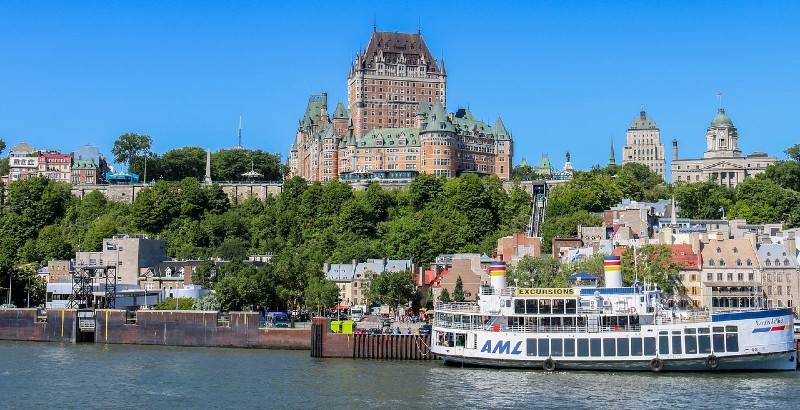
Tourism has bounced back strongly from the depths of the pandemic, but tour operators say the industry has not yet reached pre-COVID-19 levels – and debt is still burdening thousands of small businesses across the country.
The number of international visitors remained lower than four years earlier, with tourists from the United States at 85% of 2019 levels and tourists from the rest of the world at 78%, according to state-owned Destination Canada.
According to the Association of Canada’s Tourism Industry, the tourism industry generated more than $109 billion in revenue last year, up about 4% from 2019 but significantly less in real terms when inflation is taken into account. Beth Potter, head of the association, called on the federal government to create a new low-interest loan program specifically for this sector and a temporary flow of foreign workers.
“We had no indication that this would happen,” she laments. In fact, the federal government wants to reduce the share of temporary residents in Canada’s population over the next three years. The impact will not be “as extreme” in tourism as in agriculture or food processing, the director admits.
But travel, hospitality and leisure offerings are essentially ‘perishable goods’, meaning it is extremely difficult to recoup lost revenue. “If you don’t book the hotel room tonight, you won’t be able to book that room twice tomorrow night,” says Beth Potter.
Pessimism
The recovery of the tourism sector is lagging behind that of the general business world. According to data from Destination Canada, the number of businesses associated with active tourism last December was slightly below pre-pandemic levels, while the number of businesses overall exceeded 2019 figures.
Across all economic sectors, two in three small and medium-sized businesses still had pandemic debt at the end of last year, with an average of $107,700, according to a Canadian Federation of Independent Business survey of 3,148 members.
Of the fourteen sectors surveyed, catering and transport companies were among the most pessimistic about the coming year. Only retail received a worse rating. Ski resorts and tourism hotspots like the Okanagan Valley have had a particularly difficult year.
“We have had winters that were not winters for us,” explains Federal Tourism Minister Soraya Martinez Ferrada. Last year we were really hit by climate change in the form of fires, droughts and floods. People even canceled their trips to Canada because they thought the entire country was on fire. Think of the smoke in New York. »
Even more difficult in the region
While some tourism statistics for Canada’s four largest cities – Toronto, Montreal, Vancouver and Calgary – are now on track to surpass 2019 figures, the country’s more remote regions continue to struggle. “The regions that are a little further away from these very large centers have had more difficulty regaining their dynamism,” the minister underlines. Business trips and conferences are also lagging behind. »
Regional transportation has also failed to recover, with domestic capacity at 84% of 2019 levels in the fourth quarter of 2023, Destination Canada said. This could hurt domestic travel and leisure markets.
The minister cited commitments included in the federal budget to support tourism. The government has effectively committed to providing new funding to replace Via Rail’s aging fleet on routes outside the Quebec-Windsor corridor – an amount not yet specified due to the future takeover mechanism.
Soraya Martinez Ferrada also highlighted $124 million for Atlantic ferry services, as well as investments in northern development opportunities and indigenous tourism activities announced last year.
While no new sector loans are on the horizon, she presented the $2.5 billion in “carbon rebates” expected to land in the bank accounts of small and medium-sized businesses in the coming months as financial support.